Improving how we talk and write about science
IMS2
June 9, 2026 | 14h-16h CET
SUMMARY
Communicating our work effectively is a crucial part of science – for us as individual researchers or practitioners and collectively as a community. This two-hour webinar is especially intended to prepare those who will participate in and present their work at the upcoming ISFG 2026 Congress in Montreal.
Are you preparing a poster or oral presentation? Are you writing a proceedings article about your work?
Then this webinar is for you!
The first half of this webinar will cover principles and theory behind effective communication. The second half will involve examples from the presenters’ experiences shared in an interview style back-and-forth format. Topics to be covered will include skills for writing an abstract, ideas for poster layouts to share your data and tell your story, and what to consider if you use artificial intelligence (AI) tools in your writing.
INTENDED AUDIENCE
Presenters at ISFG (posters, talks, proceedings articles)
LEARNING OUTCOME
Give audience members tools for designing effective science communication at ISFG
PRELIMINARY PROGRAM
How and when can I access the live IMS2 ZOOM session? Click here to find out!

Introduction to forensic body fluid identification (and contributor assignment) using RNA, DNA methylation & microbiome analysis
IMS1
March 4, 2026 | 12h-16h CET
Preliminary program:
How and when can I access the live IMS1 ZOOM session? Click here to find out!
NOTE: the ZOOM link for the IMS1 session has been sent to all confirmed participants on March 2nd, 2026, via a new email. If you haven’t received it, please contact the organizer at isfg.ims@gmail.com.
Details and summaries for each lecture/panel:
Summary
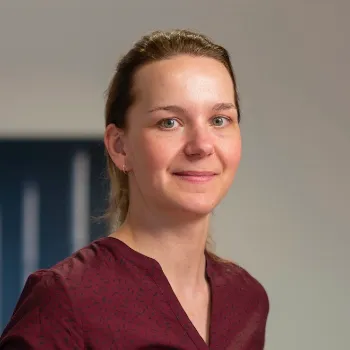
RNA and DNA co-extracted from forensic stains can be used for identifying body fluids using three different marker types. The advantages and limitations of these methods and markers are evaluated on a range of stain types and casework samples.
Summary
Presentation on the development of capture-based and amplicon-based MPS panels for DNA methylation markers. Panels' performance were tested using various body fluids and tissues, and the results will be discussed. Cross-reactivity and application to mixture analysis can also be covered.
Summary
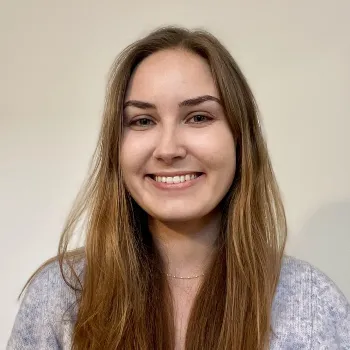
While targeted RNA analysis is a well-established method for body fluid identification (BFID) in forensic genetics, whole transcriptome sequencing (WTS) provides a comprehensive alternative that expands the depth of biological evidence to encompass both human identification and microbiome analysis.
This presentation explores the advantages of a total RNA approach. By moving beyond a fixed set of genes, WTS offers superior resolution for BFID with a high density of cDNA SNPs within tissue-specific transcripts, ultimately providing higher discriminatory power for donor assignment. A significant advantage of WTS is the ability to perform simultaneous human and microbial analysis. By capturing the total RNA environment, we demonstrate how the microbiome acts as a secondary identification-layer for BFID. We further present practical examples of mixture deconvolution, showing how WTS can resolve cDNA profiles in biological stains containing multiple donors and body fluids. Finally, we demonstrate that WTS analysis is fully compatible with the Illumina MiSeq benchtop sequencer, suggesting that these comprehensive workflows are readily accessible for routine forensic casework.

Summary
This talk presents the first genome-wide, high-resolution map of the human sperm methylome generated using long-read sequencing, specifically nanopore sequencing by Oxford Nanopore Technologies. Using sperm samples from 20 individuals across a wide age range and our custom computational pipeline (ECHO), we directly profiled DNA methylation across the entire genome, including repetitive and GC-rich regions that have remained largely inaccessible to short-read approaches. As part of the broader UNIQUE project, this pilot study identifies novel inter-individual, sperm-specific, and age-associated differentially methylated regions (DMRs). I will discuss the generation of this UNIQUE dataset, provide a comprehensive overview of the resulting sperm methylomes, demonstrate concordance with known sperm-specific signatures, and introduce our first findings on novel biomarker discovery. Beyond advancing our understanding of sperm cell identity and epigenetic individuality, these results open new avenues for applications in forensic epigenomics, reproductive biology, and personalized biomedicine.
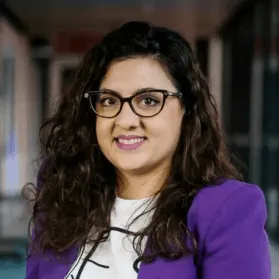
Titia Sijen "Casework experience and legal outcomes for mRNA-based body fluid identification"
Over a decade, we apply mRNA-based body fluid and organ typing in forensic cases. The presentation will briefly summarize the experiences and legal outcomes.
Cornelius Courts "Forensic RNA analysis – potentials for optimization and a daring outlook"
Jana Naue "Challenging body fluids: On ‘specific’ identification of human materials"
The analysis of body fluids is based on molecular biomarkers that exhibit distinctive patterns indicative of a specific biological material or body fluid. However, it is important to note that cell type heterogeneity, the anatomical proximity of certain biological materials, inter-individual variation due to other biological factors, and sampling strategies may all have an impact on the final sample representative of the "body fluid".
Furthermore, differences in research and development of assays (marker identification, assay development and validation) in comparison to the subsequent application poses challenges. Firstly, it is evident that the quality of laboratory research samples is predominantly higher with ‘pure’ collected material. In contrast, forensic traces are of variable quality, with impaired cell and DNA integrity, thereby introducing additional heterogeneity among trace samples. Secondly, the initial marker specificity is measured by cross-checking to other body fluids and biological materials. The validity of this comparison is however dependent upon the selection of other materials for comparison. These points raise questions how heterogeneity, sampling and cross-reactivity affect 'body fluid-specific' biomarkers and what actually defines a body fluid.
Mirna Ghemrawi "Comparative Omics and Contextual Insights: Advancing the Future of Body Fluid Identification"
The field of body fluid identification (BFID) is evolving beyond traditional serology toward molecularly informed, highly specific approaches. While conventional methods provide valuable context to DNA typing, their limited sensitivity, specificity, and confirmatory power often constrain interpretation—especially for trace or mixed samples.
Emerging omics-based technologies are reshaping this landscape. This presentation will highlight findings from the Comparative Assessment of Emerging Technologies for Body Fluid Identification, an NIJ-supported study that evaluated epigenetic, transcriptomic, and proteomic workflows against standard immunochromatographic assays. The study demonstrated clear performance gains in sensitivity and discriminatory power, while underscoring the importance of comprehensive validation before routine implementation. These data serve as a critical roadmap for operational laboratories preparing to integrate next-generation molecular tools into casework.
Beyond comparing technologies, this presentation introduces an often-overlooked dimension: the influence of sample deposition and collection methods on molecular signatures. Recent methylation analyses of saliva revealed subtle but consistent shifts in epigenetic profiles depending on how samples were collected—findings that emphasize the biological complexity underlying forensic evidence. Recognizing and controlling for such contextual variables will be essential to ensure reproducibility and interpretive accuracy as omics transitions from research to practice.
Peter Henneman "Advancing Forensic Genetics with Novel Sequencing Technologies: From MPS and Array-Based Methods to Nanopore and Emerging Illumina Platforms, Moving Toward a Universal Assay System"
Forensic DNA phenotyping applies genetic and epigenetic markers to infer biogeographical ancestry, physical appearance traits, and biological age, particularly when conventional methods fail to identify a suspect or victim. DNA methylation, a key epigenetic modification, is especially valuable for age estimation and, due to its tissue-specific patterns, also for body fluid identification, with the latter aiding in crime scene reconstruction. Current MPS-based methylation analyses require time-consuming, multi-step processing. Nanopore sequencing offers a promising alternative by enabling real-time, direct detection of methylation without DNA conversion.
Recently, we evaluated the potential of Nanopore’s PromethION 2 platform for comprehensive, single-assay forensic epigenetic analysis of biological age estimators (epigenetic clocks) and body fluid markers, focusing on relatively low DNA samples (<100 ng). We showed that Nanopore yields generally low read-depth coverage that results in beta values of zero and one for methylation status, despite methylation being a continuous variable. This poses challenges particularly for accurate age estimation, and to a lesser extent for body fluid identification. Moreover, we demonstrated that Nanopore-powered age prediction models systematically estimated older ages than expected. Subsequent application of a proof-of-concept linear correction model significantly enhanced age-estimation accuracy. Body fluid identification of blood and saliva was highly accurate under both high and low read-depth coverage conditions.
Our exploratory study highlights the potential of adaptive sampling on PromethION for forensic age prediction and body fluid identification. Future studies should focus on validating analysis thresholds, improving performance on lower-quantity/quality samples, and advancing body fluid identification models for an expanded tissue set.